
In the western Cuban city of Cárdenas, about 150 kilometres from Havana, an Alliance pastor and his wife who once knelt in prayer before a completely empty pantry now run a feeding ministry that serves fifty elderly people twice a week. Their story was published by the Christian and Missionary Alliance (C&MA USA) and written by an Alliance worker serving in Latin America who writes under the name Freddy.
Fide and Vivian pastor a congregation that many in the city still remember as "the church of the swimming pool" — a place where a symbol of status and recreation became, in the account's words, a living testimony of God's love in action. Fide's story did not begin in scarcity. For years he worked as a cook in Cuba's tourism industry, one of the few sectors in which a person could reach a relatively comfortable standard of living, with stability and a level of food security uncommon for most Cuban families. But, the account says, God began stirring his heart, and the calling was both clear and costly: leave everything behind and follow him into ministry. He did, and he and Vivian have served on the equivalent of about twelve dollars a month — the average salary for pastors planting churches in Cuba.
During Cuba's worsening food crisis the couple found themselves with no food and no money to buy more. With no visible solution before them, they did what many Cuban pastors have learned to do in times of deep scarcity: they knelt and cried out to God. Hours later, leaders of the C&MA in Cuba arrived at their home carrying a box of humanitarian aid sent from the United States in a shipping container. For Fide and Vivian the moment was more than assistance; it reshaped how they understood ministry, and what they had received in their own vulnerability became the model for how they would serve others.
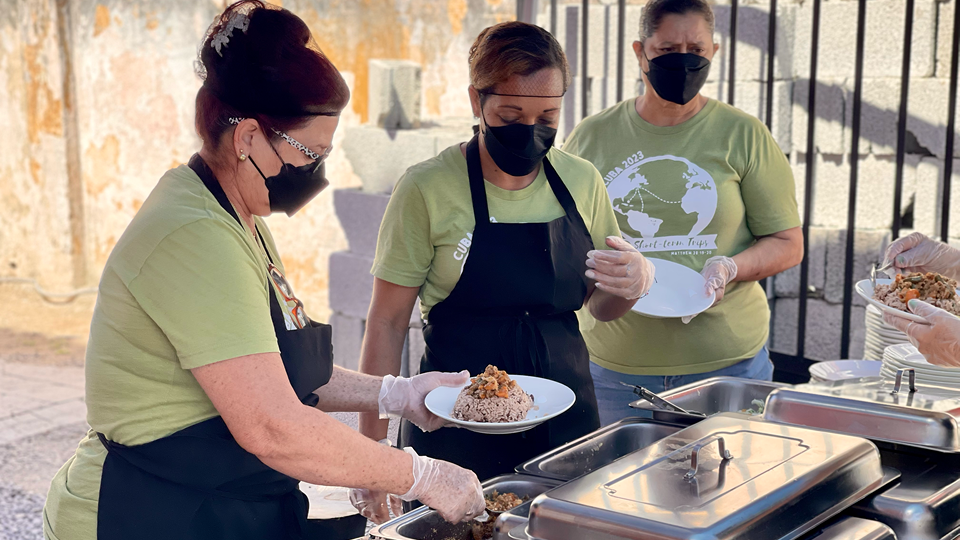
They opened the Jehovah Jireh Dining Hall, at first using their own very limited resources, and now pray weekly for provision to feed fifty elderly neighbours twice a week. Many of those men and women live on pensions of between three and five dollars a month — barely enough to cover basic needs amid Cuba's ongoing economic collapse. For them, the account notes, a hot meal means far more than nourishment: it means dignity and care, and a tangible expression of the love of God. For Fide, who once cooked in an environment of abundance, preparing meals for the most vulnerable has become a direct expression of his calling, and the story reflects what the Alliance describes as a growing commitment among its churches in Cuba to practical compassion for those most in need.
Source: Christian and Missionary Alliance (C&MA USA) — cmalliance.org/your-generosity-in-action-when-hope-arrives/


