
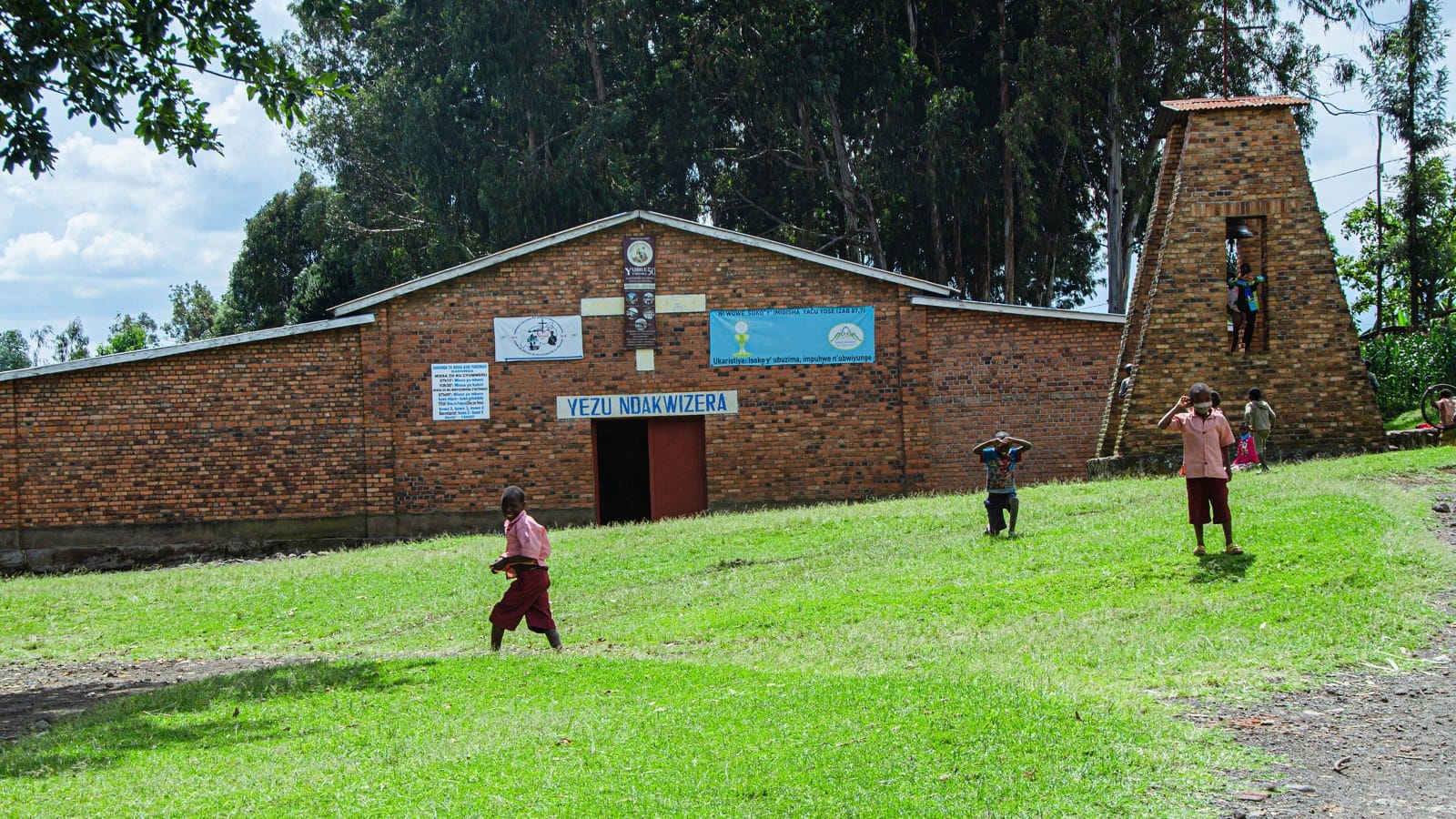
Five years' notice, two weeks of inspections and thousands of padlocked doors: how Rwanda's Law 72/2018 reshaped church life, who it hit hardest, and why its neighbours are watching.
"This is not the way church should be done," one Rwandan believer told reporters in the summer of 2024, describing the online service their congregation had moved to after its building was shut. "Fellowship happens best in person."
It looked like a sudden crackdown. In fact it rested on a law passed six years earlier.
Five years' notice
The law is Law No. 72/2018 of 31 August 2018, which sets out how faith-based organisations in Rwanda must be organised and run. It is enforced by the Rwanda Governance Board (RGB), working with district authorities. Its first application, in 2018, closed roughly 700 prayer houses. Churches were then given a five-year transition window to meet the requirements, which ended in September 2023.
The main test came the following summer. From late July 2024, RGB teams and local officials inspected more than 13,000 places of worship in about two weeks. Those that failed were closed on the spot.
Nobody agrees on exactly how many. By mid-August one report counted more than 4,000 closures, including about 700 in the capital, Kigali. Other reports put the total from that campaign at more than 5,600, and one source at 7,700. A regional report later spoke of nearly 10,000 churches and mosques closed since the regulations began. The figures differ by date and counting method, but all point the same way: thousands of places of worship closed within weeks.
What the law asks of a church
The requirements fall into four groups:
- Qualified leaders. Pastors and legal representatives must hold a recognised university degree in theology, or another degree plus at least 1,200 hours of certified theological study.
- Safe, sound buildings. Soundproofing, lightning conductors, fire safety, rainwater or water storage, sanitation, and off-street parking.
- Enough land. A minimum plot of about half an acre, whether the church serves a busy city street or a village where everyone walks.
- Paperwork. Letters of collaboration from district authorities, a written statement of doctrine, a strategic plan, and tax and social-security records.
Who was hit hardest
Large, centralised churches, with titled land, seminaries and administrators, could mostly absorb the change. Small Pentecostal and independent congregations, which meet in rented rooms, tents and homes and are led by lay pastors, could not.
Critics of the law say it favours the wealthy. Pastor Kabagambe Nziza of New Life Bible Church told reporters that the rules should distinguish rural from urban settings, since soundproofing and parking make little sense in a village where people walk to church. Church leaders also complained that more than 90 percent of Rwanda's pastors have no university theology degree.
The historic churches were not spared. According to the African Pastors Fellowship, only 23 of 239 Anglican churches in the Kigeme diocese remained open. Anglican Bishop Assiel Musabyimana warned that congregations that cannot meet on Sundays also struggle to fund their ministries. Yet Archbishop Laurent Mbanda took a different view: churches, he said, had known the regulations and had had five years in which to comply.
The government's case
The authorities say the law protects citizens. The RGB describes its aim as protecting the people of Rwanda, and President Paul Kagame has defended the crackdown as a response to "mushrooming churches" that take money from poor Rwandans. According to reports, he has also questioned what thousands of improvised churches in Kigali contribute compared with things like boreholes or factories.
The RGB has said it will keep working with religious leaders. The board has also opened one practical door: a partnership with Re-Forma, a South African organisation that trains African church leaders, under which Re-Forma certificates now count as evidence of suitable theological training. The African Pastors Fellowship has discussed making Re-Forma materials available to pastors through its digital library.
What it means beyond Rwanda
Three lessons stand out for the rest of the region.
Closures move worship, they do not end it. Reports from Rwanda describe closed congregations turning to online Bible studies and home fellowships, which reports say the authorities later moved to restrict as well. Regulation that pushes worship out of sight arguably leaves the state with less to inspect, not more.
Training only counts if the state recognises it. The Re-Forma arrangement shows that a route exists for churches that cannot afford a university degree, but only for a recognised provider. A certificate from an institution the authorities do not accept, including some foreign online programmes, may not help a pastor at all.
The next country will look at Rwanda's rulebook. In March 2026 Uganda's General Muhoozi Kainerugaba said his movement would arrest "fake pastors" and require every church leader to hold a theology degree, and the report carrying his statement noted that the proposal mirrors Rwanda's.
For the Free Evangelical family, whose tradition rests on the independence of the local congregation and on the calling of ordinary believers, the Rwandan story raises hard questions. It is fair to want honest accounts, safe buildings and pastors who are trained to handle Scripture. It is also fair to ask who decides what training counts, and what happens to a village church that cannot afford the answer.
What we still do not know
Reliable numbers on how many closed churches have reopened are hard to find. Reports that the rules have since been extended to private homes and open-air crusades come from secondary sources and deserve further checking. And Rwanda's own churches are not of one mind: some accept the rules as a price worth paying, others are meeting online or in quiet groups.
What is clear is that a law passed in 2018 reached thousands of congregations in 2024, and that its neighbours have noticed.
This report draws on coverage by In Context International, Christian Daily, the African Pastors Fellowship, AllAfrica and Human Rights Without Frontiers. Figures vary by source and date.


