
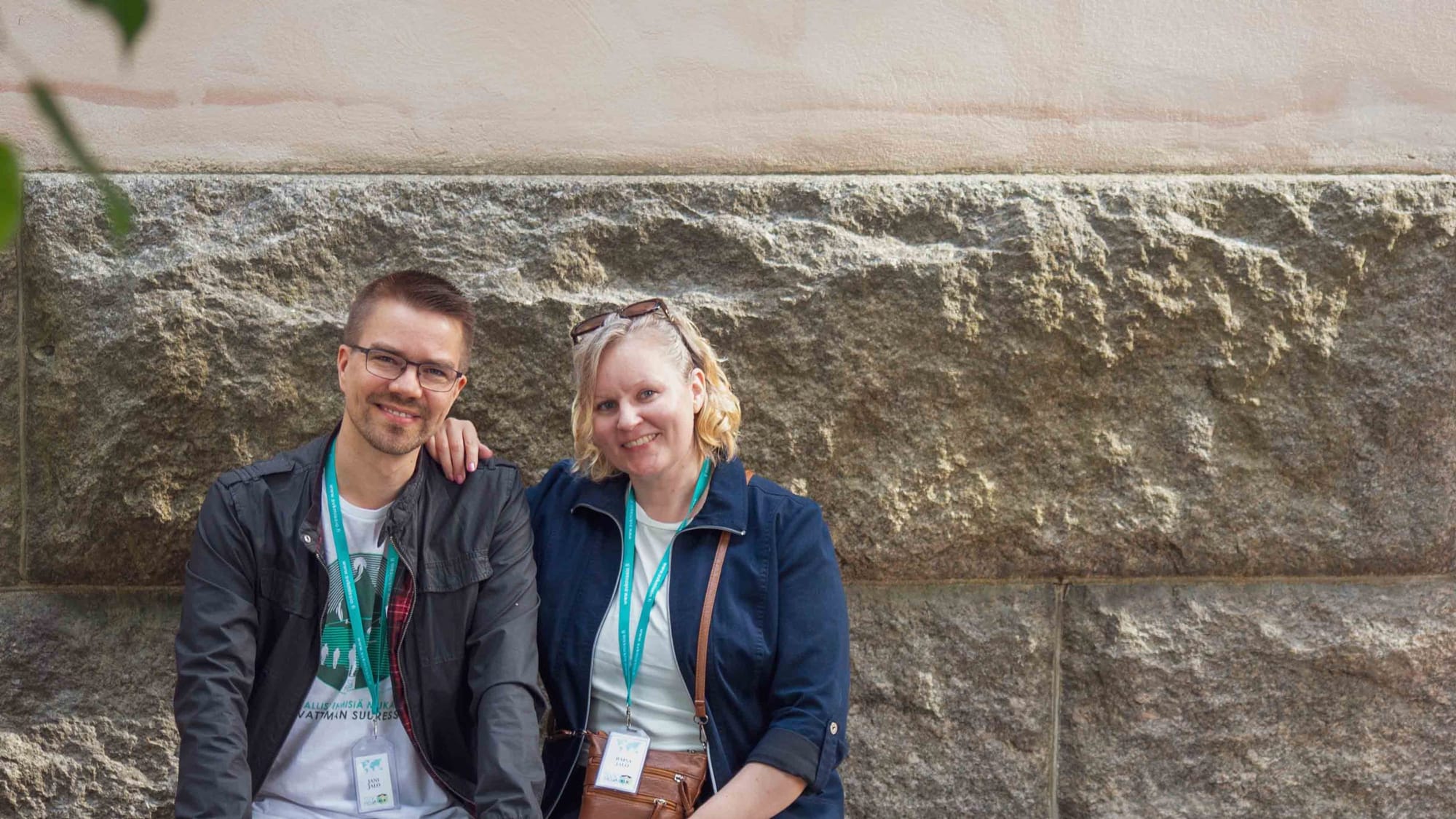
Jani and Raisa Jalo flew out of Finland on 19 August bound for Malindi on Kenya's east coast, sent by Suomen Vapaakirkko, the Finnish Free Church, to work among communities that have had little or no contact with the Christian message. The couple were commissioned for long-term missionary service at the Free Church summer festival on 7 June. They will serve in partnership with Fida, the Finnish Pentecostal mission agency, for which Kenya is a long-established field. They have set no end date for the assignment.
For the Finnish Free Church itself, Kenya is a new mission field, and the sending arrangement is unusual in a way that says something about how Finland's free churches now work together. Eleven congregations have committed to supporting the Jalos financially, alongside individual donors and two further congregations acting as prayer partners — and those supporters are drawn from both Free Church and Pentecostal circles, with a Lutheran parish group also praying for them. The couple believe they may be the first missionaries sent with that particular combination of backing. In their home town of Huittinen, both the Free Church and the Pentecostal congregation are among the senders. Kenya is a largely Christian country, but an estimated 5.8 million people belong to unreached groups, a significant share of them along the eastern coast, where in some areas Christians make up less than one percent of the population.
The Jalos intend to join evangelism with work among people with disabilities, a combination shaped by their own family. Their son Samuel, now 23, has Down syndrome, and Raisa home-schooled him for six years before the couple began mission and pastoral studies at the Teopolis institute in autumn 2020. They went on to serve as pastors of the Huittinen Free Church until the end of April. In parts of Africa the birth of a child with a disability is widely regarded as a curse; families can be shunned by their communities, and children are sometimes hidden away or worse. During an exploratory visit in February 2025, when they met nine of Kenya's thirteen regional bishops, conversations with local leaders confirmed the approach. "When we tell people that we love our son who has an intellectual disability, it can build trust and raise the value placed on disabled children," Jani said, describing women who spoke about their own disabled child for what may have been the first time. As Raisa put it, in a sense their missionary calling began 23 years ago, when Samuel was born.
(Originally published in Finnish. Summary translated by CC / Connexion.)
Source: Suomen Vapaakirkko / Suomen Viikkolehti — svl.fi


