
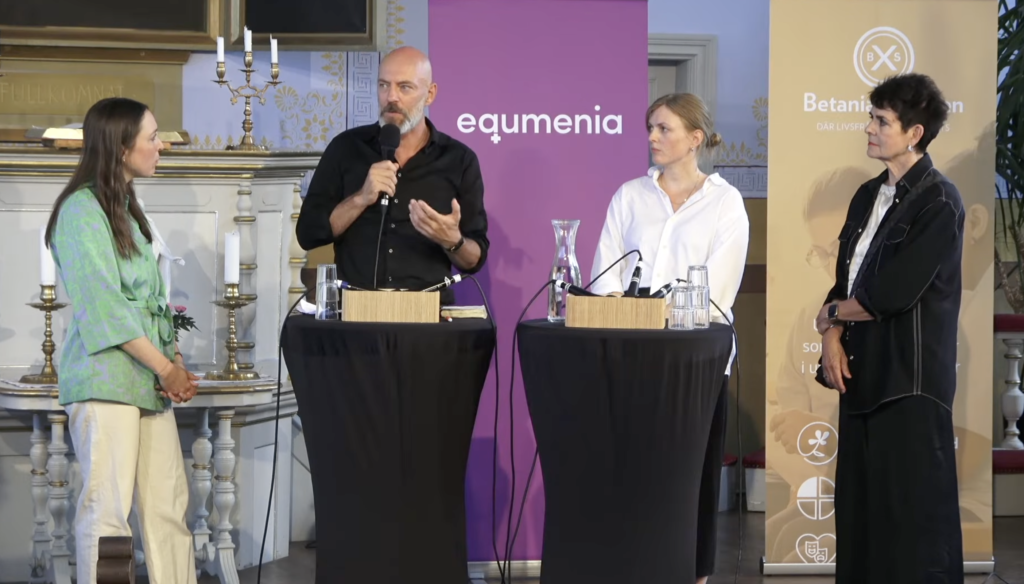
Swedish teenagers and young adults score significantly lower on measures of meaning and purpose than both older Swedes and their peers in other countries, according to findings from the Global Flourishing Study presented during Almedalen Week in Visby. The international study, which surveyed over 200,000 participants across 22 countries including some 15,000 Swedes, revealed a striking age gap unique to Sweden — younger respondents reported far less sense that what they do is meaningful, even as they expressed unusually high optimism about their personal futures.
Speaking at a seminar hosted by Equmeniakyrkan and its youth organisation Equmenia, Nora Hansson Bittár, a doctoral student at the Stockholm School of Economics, noted that the pattern does not appear in other countries studied. “It is not that Swedish youth are the unhappiest,” she explained, “but they experience substantially less meaning.” David Thurfjell, professor of religious studies at Södertörn University, described religions as “meaning machines” that historically embedded people in something larger than themselves — connections he argued modern society has systematically weakened. The result, he suggested, is a freedom paradox: earlier generations fought external constraints, but today’s young people, having inherited that freedom, turn frustration inward when they encounter personal limits.
Maria Hammar, project leader for Equmenia’s Existens initiative — which runs conversation groups for young people aged 13 to 25 — offered an on-the-ground perspective. A recurring insight from the groups, she said, is that young people do not want ready-made answers from adults; they want someone who will simply listen. Mixed-age groups proved especially valuable, with participants expressing relief at discovering that adults have not “found the meaning of life” either. Ullakarin Nyberg, a senior physician and suicide researcher at the Karolinska Institute, underscored the importance of everyday human encounters, warning against turning normal emotional responses to difficult situations into medical diagnoses. Across the panel, the shared conclusion was that no quick fix exists — but creating contexts where people are seen, needed, and able to share life so that existential questions are not borne alone is what matters most.
(Originally published in Swedish. Summary translated by CC / Connexion.)
For free church formation resources including this topic, visit Worldwide Evangelical Seminary.
Source: Equmeniakyrkan / Sändaren — sandaren.se


