
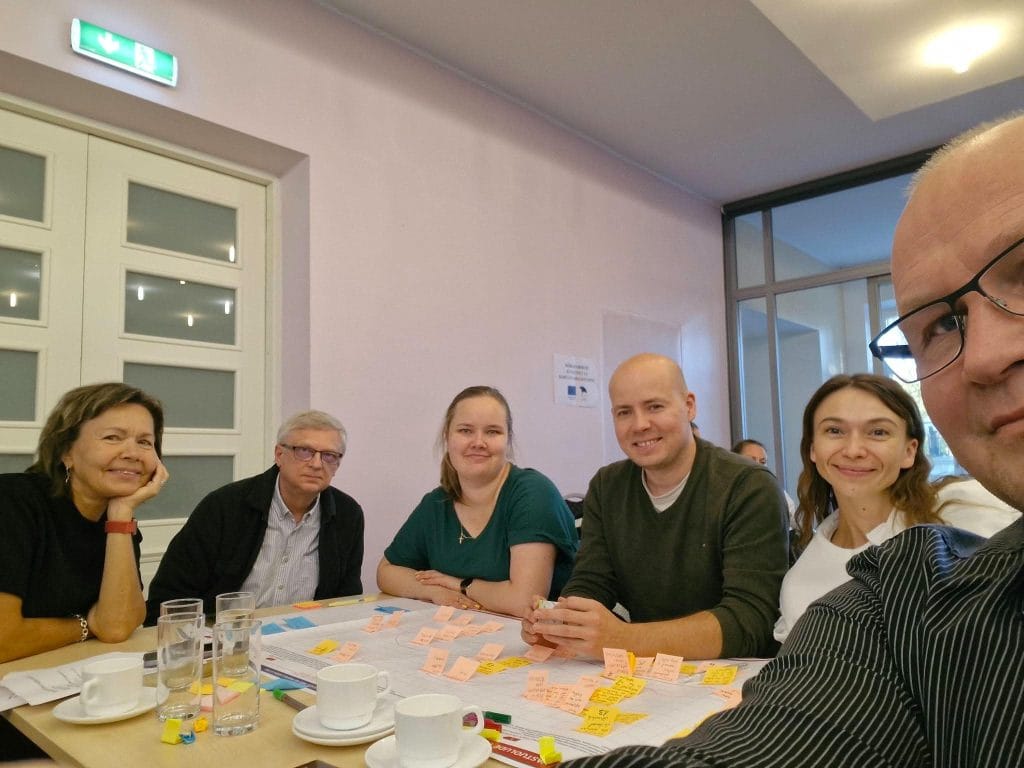
Teachers from Estonia’s theological schools have begun an unusually broad joint project to strengthen the training of pastors and church workers, meeting for two days at Pühajärve in the south of the country. Four teaching institutions are taking part in the development project, which is financed through KVARA, an Estonian programme that supports the quality of higher education. The scheme requires at least two schools to work together; four signed up. The gathering brought in not only lecturers but also employers, students, alumni and members of the schools’ leadership teams.
The meeting was organised around eight round tables guided by two facilitators, who asked participants to map the problems they face, the effect those problems have in the short and long term, and their root causes. Each table then had to agree on three problem areas it was “in no way prepared to accept” and wanted to change. The team that reported the meeting named three of its own: that the good news does not reach people because the church cannot speak to society; that lecturers and ministry workers are overstretched and underfunded; and “theological vagueness”, a lack of clarity in what is actually being taught. Other tables raised the need for dialogue and the themes of mental hygiene and self-care, and one group argued that theological higher education should become as individual and as discipleship-shaped as possible — a striking point to make in a conversation that also turned repeatedly to money.
The second day was given to proposed interventions and to describing the conditions each group would need in order to act. Writing afterwards for the Estonian free-church portal kogudused.ee, Einike Pilli said the greatest result of the two days was simply the time spent together, the thoughts shared and the trust built between institutions that had previously worked in parallel — something she called important precisely because the process is only beginning. Three-member delegations from each school will now travel to Belgium and the Netherlands to study how theological training is organised there, and the group will meet again to turn what it has noticed into something more concrete. “At least in theological education there has been a kind of developmental leap in ecumenical cooperation,” Pilli wrote. “What will finally come of it is in God’s hands.”
(Originally published in Estonian. Summary translated by CC / Connexion.)
Source: Union of Free Evangelical and Baptist Churches of Estonia (kogudused.ee) — kogudused.ee/arenguhupe-teoloogilise-hariduse-koostoos


