
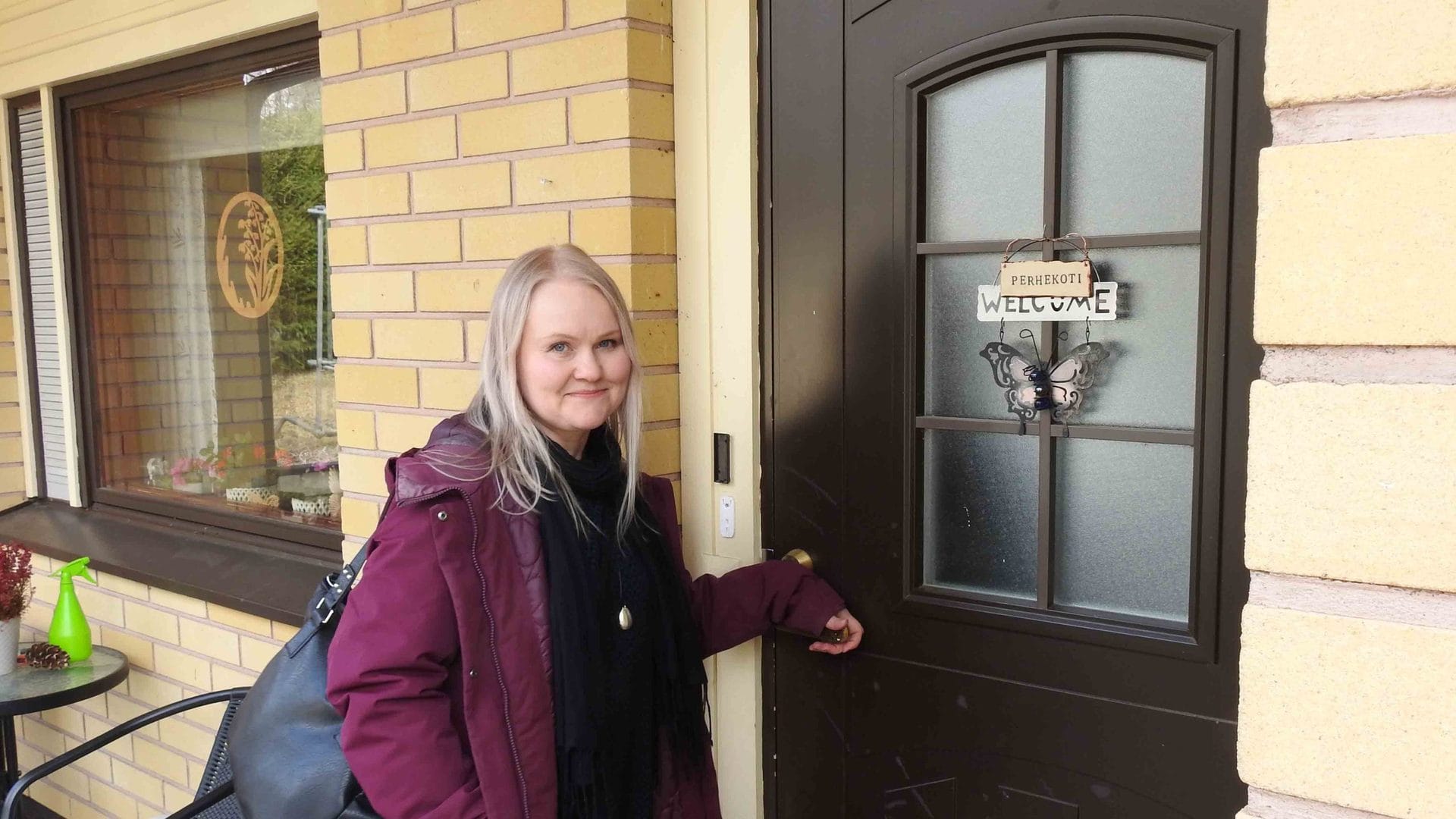
The Free Church congregation in Kitee, in eastern Finland, has a feature few congregations can claim: its own "mummola", the Finnish word for a grandmother's home. It is a family home for older people run by Maria Pesonen, a nurse who now works there full time, and it cares for members of the congregation in ordinary family life rather than in an institution.
The home operates as a commissioned family care home, an arrangement under which the regional wellbeing services county transfers part of its own care responsibility to the carer and pays a fee for it. It can take a maximum of six residents; four live there at present. Pesonen describes the setting as a real home, not a homelike institution, in which residents live alongside the family carer. The days follow an ordinary rhythm — cooking, laundry, rest and time spent together — with no fixed timetable. After running the home alone for its first year she found she needed more free time, and Merja Havukainen now assists at 20 per cent, which allows Pesonen more days off each month. Havukainen praised the quality and variety of the care the residents receive.
The home grew out of the congregation's own concern for its older members. When Pesonen returned to Kitee in 2019, the situation of the congregation's elderly came into focus: many had carried responsibility for decades and given their lives to the congregation, and many had no children or family able to care for them as their health declined. She recalls a prayer meeting at which she asked God what she could do for them, and says the idea of a family home was laid on her heart; she completed family carer training in 2021 and let the thought mature for a further two years. The congregation's elders were at first sceptical, and the coronavirus pandemic brought the congregation financial difficulties, during which Pesonen worked in a care home and in home nursing.
That work shaped the idea further. Pesonen said she saw concretely what everyday life can be like for older people at home or in institutional care, and noticed how many could no longer reach the congregation once their functional ability weakened. The question became whether a family home could offer people a safe daily life while keeping their connection to the congregation intact. Eventually a suitable property was found, along with a substitute to cover her work in the congregation, and the elders gave their approval. The home opened in January 2024.
(Originally published in Finnish. Summary translated by CC / Connexion.)
Source: Suomen Vapaakirkko / Suomen Viikkolehti — svl.fi/seurakunnalla-on-oma-mummola-kiteella/


