
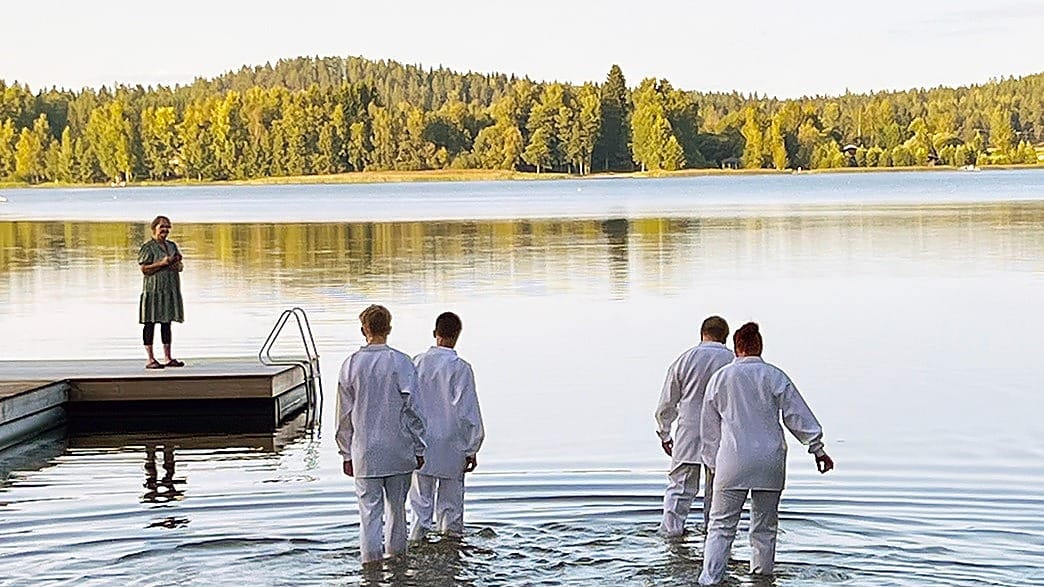
Suomen Viikkolehti has published an account of how the Finnish Free Church's teaching on baptism took shape, following a seminar at which questions about baptism were raised. The article, published on 25 October 2026, notes that the questions were practical as well as doctrinal: who may be baptised, whether church membership requires baptism, and what baptism has to do with the forgiveness of sins. It traces the answers back to the 19th-century free-church awakening rather than to a formal confession.
The Finnish Free Church has no confessional documents or collection of doctrinal statements that define baptism or other doctrines precisely, the article explains. In the awakening, the emphasis fell on personal faith and a settled relationship with God, and doctrinal questions were addressed only when the life of the congregation required it. When baptism did come up, the church reached for what it called the principle of freedom. Hjalmar Braxén, one of the first in the awakening to receive believer's baptism in 1886, stressed that every Christian is free to form a view on baptism, which he saw as neither a divider nor a unifier; being born of the same Spirit mattered more.
That principle was written into the church's life at several points. The founding assembly of 1923 held that believer's baptism was recommended but that no one should be compelled to it because of the centuries-old baptismal tradition, and that each person could settle the question individually within the church. The annual meeting of 1951 recorded in the church order that baptism is administered according to Christ's ordinance and the apostles' example, and that a member has the right to follow the practice they have received from God's word. In the early 1970s the church resolved, as it still holds, that baptism is administered to believers by immersion, while the principle of freedom remained in force.
The article adds that the church's confession makes heart-faith in Jesus Christ, and the confession of that faith, the basis of congregational fellowship — not baptism. Baptism is not treated as a means of grace but as a testimony to conversion, faith and forgiveness, and as a sign of commitment to a new life — an outward mark of an inward change.
(Originally published in Finnish. Summary translated by CC / Connexion.)
Source: Suomen Vapaakirkko / Suomen Viikkolehti — svl.fi/kaste-on-osallisuutta-kristuksen-kuolemasta-ja-ylosnousemuksesta/


