
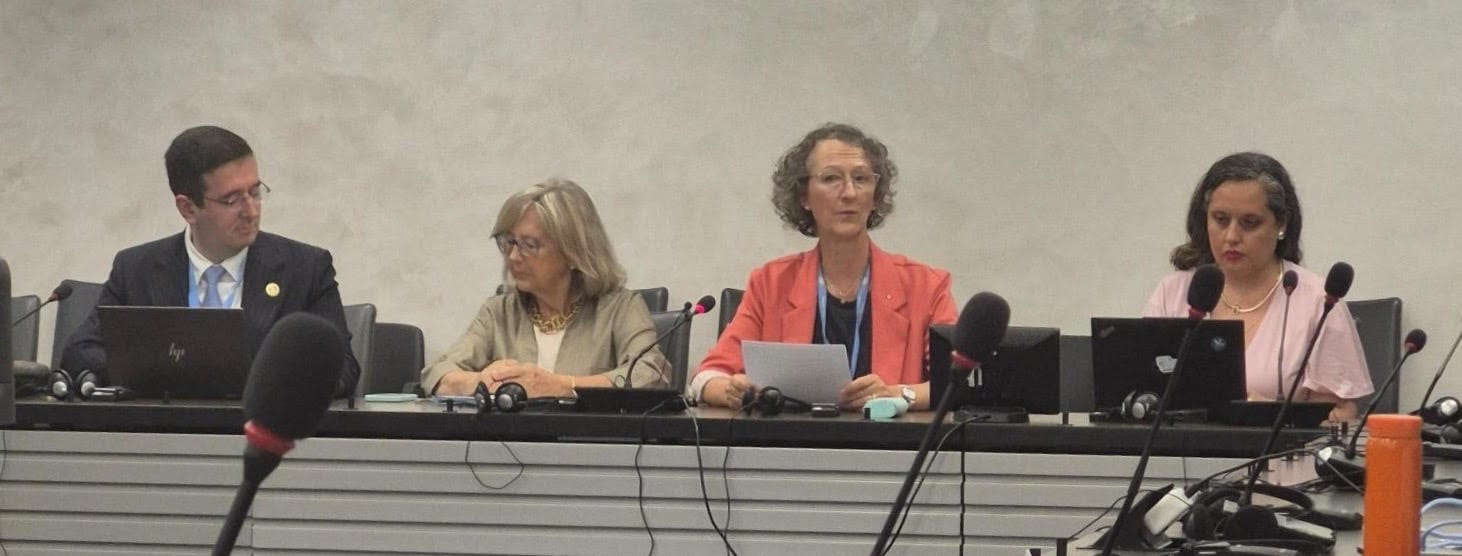
Governments in several Western jurisdictions are increasingly restricting the wearing of religious dress in public-sector workplaces, according to a new analysis published by the World Evangelical Alliance (WEA). Janet Epp-Buckingham, Director of the WEA Office to the United Nations in Geneva, released the detailed legal survey on 8 July, examining how the French legal concept of laïcité — a form of closed secularism that seeks to confine religious expression to the private sphere — has spread from France to Belgium, Switzerland, and the Canadian province of Quebec.
The analysis is significant for the global free evangelical movement, many of whose member churches are active in precisely the regions where laïcité-based restrictions have taken hold. The WEA, which represents over 650 million evangelical Christians in more than 160 nations, has identified workplace religious freedom as a growing concern, particularly as restrictions on public-sector employees — teachers, lawyers, police officers, and health workers — set a broader cultural tone. Epp-Buckingham notes that when governments restrict religious dress, private employers are often encouraged to follow suit, creating an environment where religious adherents are effectively told not to "bring their whole selves to work."
The analysis traces the legal trajectory across four jurisdictions. In France, the 2004 prohibition of conspicuous religious symbols in public schools and the 2010 ban on face coverings have faced international scrutiny — in 2018 the UN Human Rights Committee ruled against France in a case brought by a Muslim woman fined for wearing a niqab. In Belgium, the European Court of Justice upheld employers' right to ban religious symbols in 2021 and 2023. Switzerland's canton of Geneva passed a far-reaching laïcité law in 2019, and on 14 June 2026 Geneva voters approved a constitutional amendment banning elected politicians from wearing visible religious symbols. In Quebec, a 2021 law was recently expanded in April 2026 to cover youth protection and health service workers, while simultaneously lowering the legal threshold for denying religious accommodation from "undue hardship" to "more than minimal hardship." Epp-Buckingham argues that these measures disproportionately affect minority religious communities, including Muslims, Jews, and Sikhs.
Source: World Evangelical Alliance (WEA) — worldea.org


