
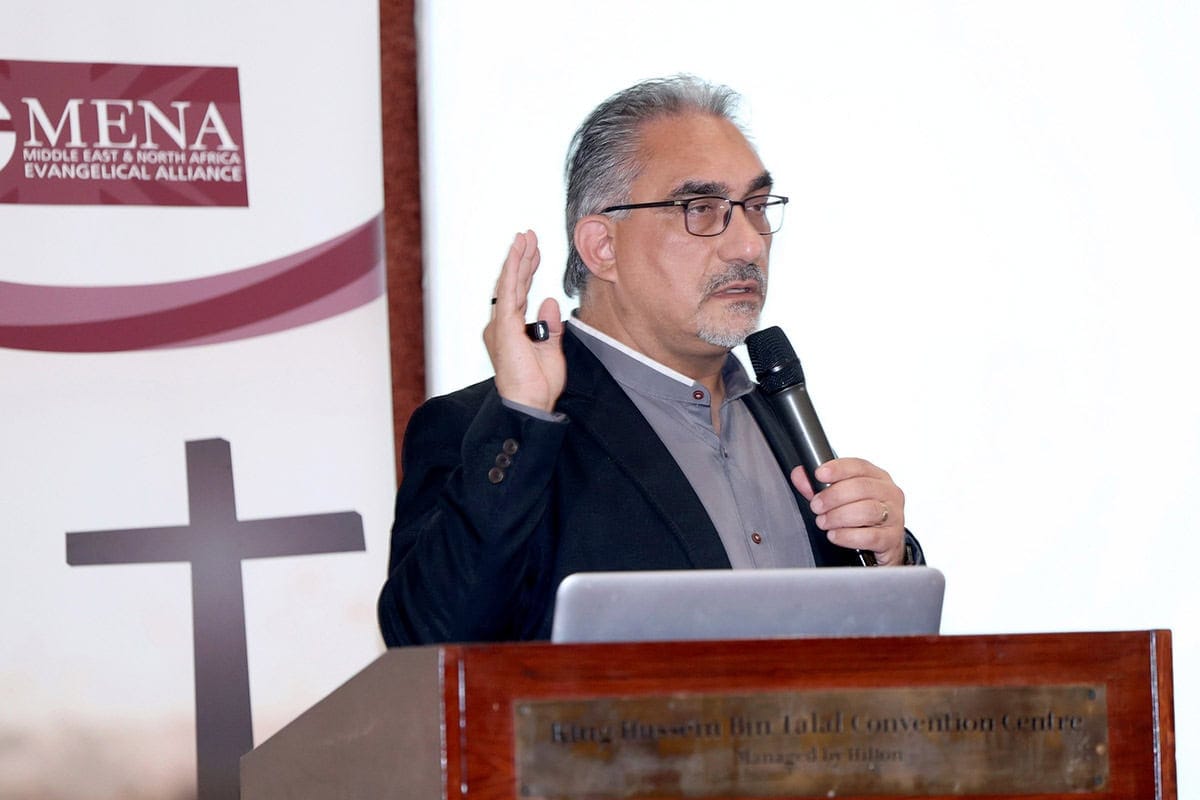
Evangelical leaders from across the Middle East and North Africa met at the Dead Sea in Jordan from 4 to 6 November for the General Assembly of the Middle East and North Africa Evangelical Alliance (MENA EA), the regional alliance of the World Evangelical Alliance. The assembly focused on strengthening cooperation among evangelical churches that face growing pressure in many countries. Across the sessions, delegates returned to four themes: freedom of worship, unity among churches, women's empowerment and mission. Participants stressed that collaboration must show in real outcomes for communities, not only in shared statements.
In his opening remarks, Rev. Dr. Jack Sara, general secretary of MENA EA, centred the meeting on freedom of worship for all people, saying the alliance exists to support believers and communities who advocate for that freedom in every nation across the region. He traced regional cooperation to partnership work that began around 2016 and pointed to practical results, such as a clinic built with contributions from several countries. A central question ran through the discussions: where is the Church today, and how can God renew it? Leaders expressed concern that declining Christian numbers could affect the future of the Church in the region by 2030.
Delegates heard reports from across the region. From Qatar, Bishop Beda Robles described an alliance of 136 churches that meet in different locations and pray in many languages, and a planned worship centre intended for the "nations": about 1.8 hectares of land have been provided, construction has begun, and the alliance hopes to open the centre around April 2028, with some $22 million still to be raised. From Iraqi Kurdistan, Rev. Firas Goga described a council spanning four governorates with 30 registered and 22 unregistered churches, its strategy shaped by migration: about 95 per cent of Christians have emigrated from Iraq, he said.
From the Holy Land, Rev. Nihad Salman reported that Christians make up about 1 per cent of the population of the West Bank and that around 70 per cent of church members are unemployed. The council he leads brings together 10 evangelical churches and 9 para-church organisations with partial recognition, and seeks full recognition. Rev. Butros Ghrayeb of Israel described severe pressures on the community, including the killing of about 200 young people in drug- and crime-related violence in 2025, and said preparations are under way for the convention's 20th anniversary celebration in Nazareth on 5 December. A speaker from Sudan explained how internal violence is affecting the work of the evangelical church there.
Women's empowerment was a recurring theme. Nisreen Hawatmeh, founder and managing director of SANADAK Orphan Ministry, described women's calling as divine, a purpose entrusted by God rather than a matter of performance or reputation, and warned against serving "to show off", drawing on biblical examples such as Deborah. On the final day, Bishop Efraim Tendero, former general secretary of the World Evangelical Alliance and executive director of the Galilean Movement, presented CALL33, an initiative to guide the Church's mission towards 2033 connected to the Year of the Great Commission. He urged participants to move from discernment to global collaboration, with an emphasis on disciple-making movements across the nations.
Source: World Evangelical Alliance (WEA) — worldea.org/mena-evangelical-assembly-jordan


