
On 19 September, leaders of ten Liberian churches agreed to form a single Free Evangelical fellowship. Six weeks later, its chair has sent Worldwide Evangelical Seminary a plan for what comes next.
Moses Womleh, elected chair at that meeting, calls it a plan for church planting and for the expansion of WWES in Liberia and Africa. In a letter at the end of October and a follow-up this month, he set out a programme for 2027 that begins in three Liberian counties and then reaches across the borders into Côte d’Ivoire, Guinea and Sierra Leone.
“Planting churches and expansion of WWES is my target now in Liberia and Africa,” he wrote on 4 November. “I am going to meet all those pastors involved; we have to work for God in that direction.”
A week in each county
Inside Liberia, the plan gives a week to each of three counties: Nimba in the north-east, Margibi on the coastal plain, and Grand Bassa on the coast. They are not chosen at random. Saclepea and Buchanan, two of the fellowship’s largest congregations, lie in Nimba and Grand Bassa, and a new church opened in Kakata, in Margibi, in October last year. A larger church-planting conference is planned at Koon town, he wrote.
Beyond Liberia
The second half of the plan looks outward. He names the Danana region of Côte d’Ivoire, the Massanta region of Guinea and Freetown in Sierra Leone — Liberia’s three neighbours. He describes the cross-border work as something he is still praying about rather than a settled programme, and asked WWES for advice.
The man behind the plan
Womleh was in first grade when both his parents died of illness. He finished high school in 1989, the year civil war reached Liberia, and continued his studies in a refugee camp across the border, where he began with WWES. He completed a Bachelor of Theology and later a Master’s degree, celebrated at Beersheba Ministries in March 2020. WWES records describe him as its first student and first graduate in Liberia.
He founded Beersheba Ministries in 2006 to evangelise rural and urban Liberia, train pastors and plant churches. “I have planted three churches on my own,” he told WWES in 2019, “no help from anybody.” By March 2025 there were five congregations, one of them a preaching point; the church in Kakata opened that October.
The seminary branch grew alongside the churches. It charges no fees, and its teachers are volunteers. WWES records show 222 Liberian students and graduates, 219 of them still active, with annual course completions rising from six in 2013 to 250 in 2024. Students are based in Monrovia, Margibi, Ganta, Gbarnga, Harper and Todee.
What the seminary does, and does not do
WWES has kept its role limited. It provides education, not licences for ministry, because credentialing belongs to the national churches. The vision, the congregations and the leadership described here are Liberian.
Womleh’s hope is that the plan will carry the fellowship into all fifteen counties. “I am very courageous that this will surely be the means of WWES and the Evangelical Free church expanding widely in Liberia within the 15 counties or regions of Liberia. I promise you.” Then he asked for prayer: “Kindly be in prayer with me to guide me in the process.”
Photographs from the field
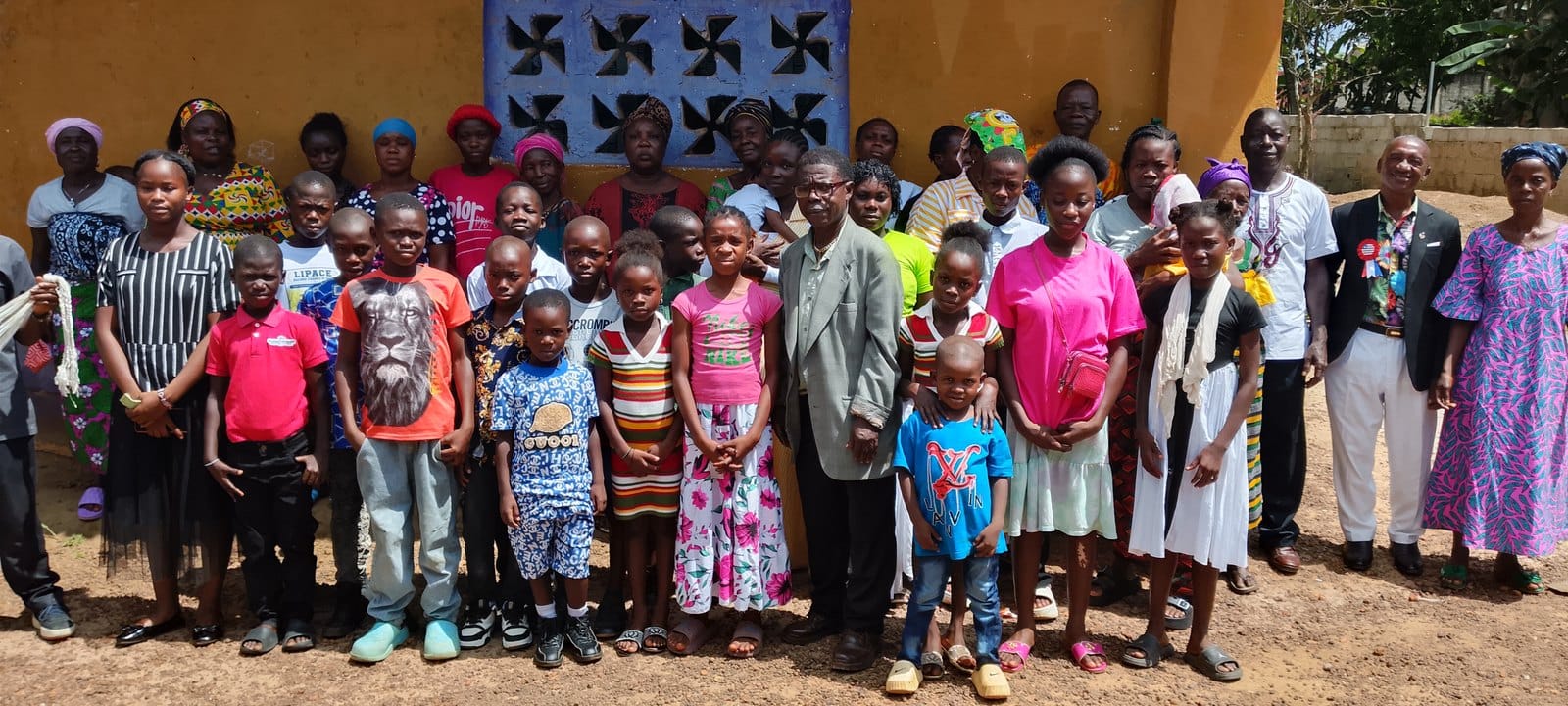
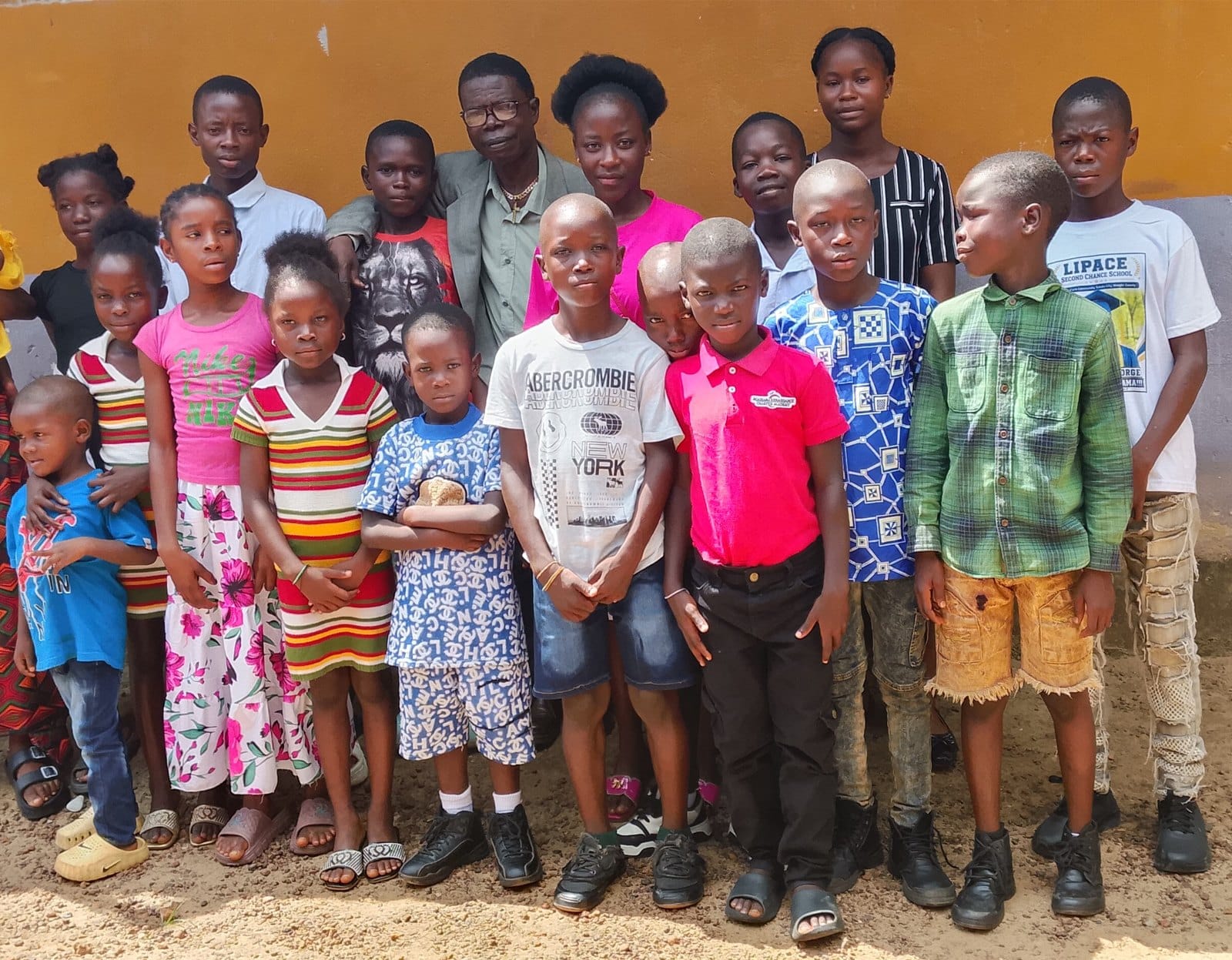
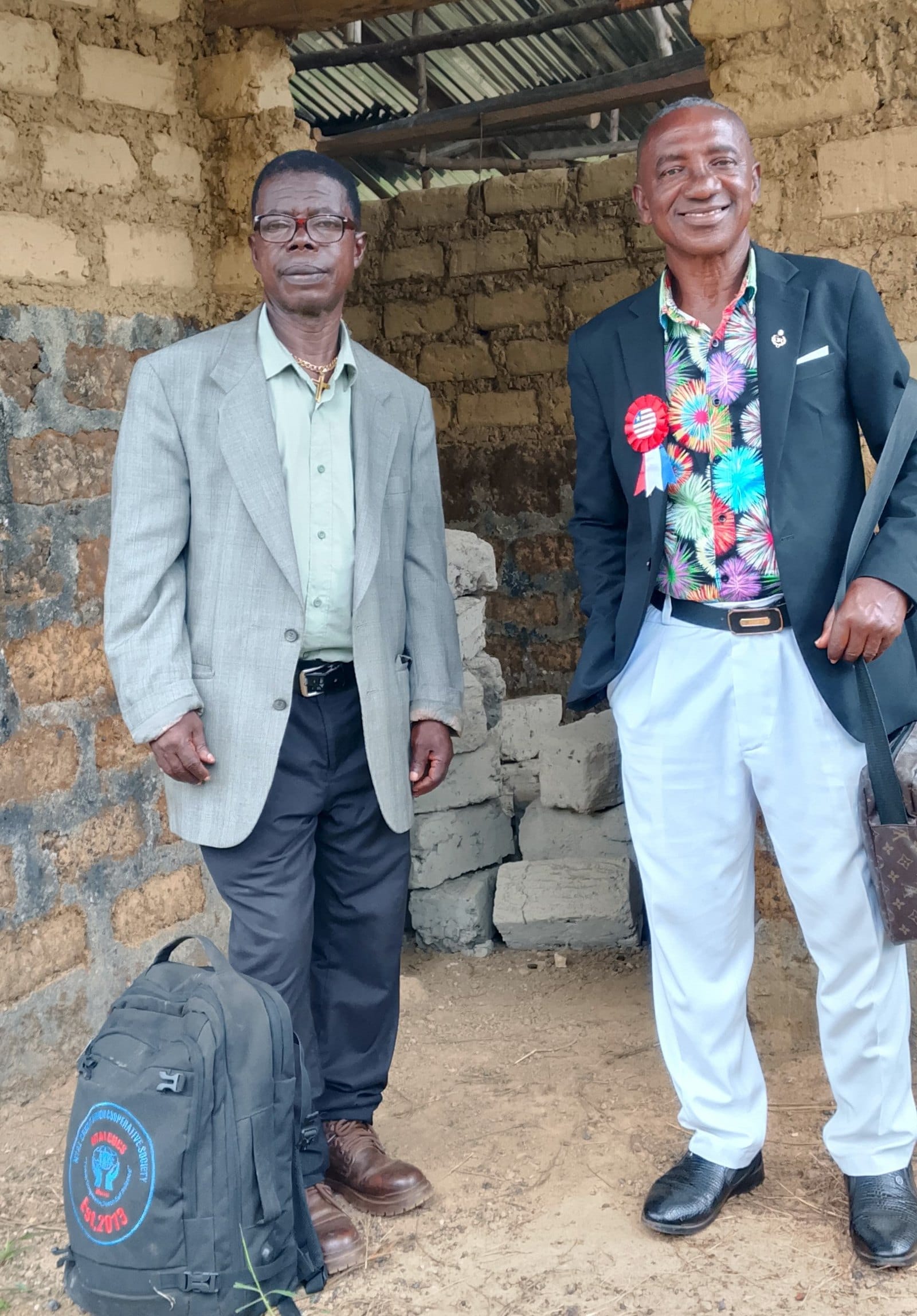
On 8 November he sent photographs: a congregation gathered outside a church, a group of children from the same community, and two leaders standing beside blocks and roof beams at a building under construction. They are the first of the updates he promised to send from the field.
The plan is a plan, not a report of work done. What is already true is smaller and firmer: a fellowship formed in September, a chair elected at its first meeting, and a seminary branch that has kept teaching while its founder looked across the border.
This story draws on Moses Womleh’s correspondence with WWES in October and November 2026, on photographs he sent on 8 November, and on WWES records. Previous: “Liberia: From a Refugee Camp to a National Church Fellowship” (26 September 2026).


