
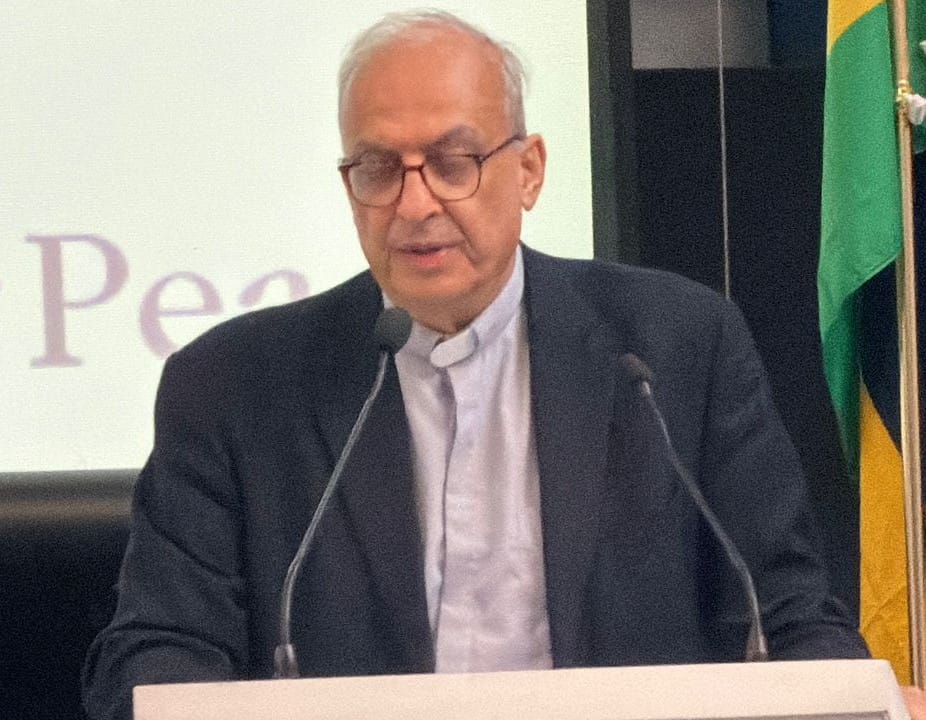
At the Religions for Peace 2026 International Council Meeting in Mauritius, the Secretary General of the World Evangelical Alliance (WEA), Rev. Botrus Mansour, called on faith communities gathered from across the globe to treat peacebuilding and human dignity not as optional moral ideals but as a direct response to God's call and the example of Christ. Speaking on 24 June to religious leaders and distinguished guests, Mansour framed the three-day gathering around shared ethical responsibility at a time when the world is struggling with polarization, conflict, and the erosion of trust between peoples and nations.
The WEA's participation in the Religions for Peace Council reflects a sustained commitment to interfaith dialogue as a dimension of evangelical witness. The WEA represents an estimated 600 million evangelicals across 143 national alliances, making it one of the largest global Christian bodies. Mansour, an Arab Israeli Christian leader with decades of experience in minority-church contexts, has consistently advocated for evangelical engagement in the public square as an expression of faith rather than a departure from it.
Opening with the question from the story of Cain — "Am I my brother's keeper?" — Mansour answered plainly: "Yes. We are responsible for one another. We are not called to be indifferent to the suffering of others or to the future of the societies in which we live." He then turned to the New Testament, highlighting Christ's Parable of the Good Samaritan, in which the compassionate figure is someone regarded as an outsider. Mansour stressed that the parable teaches compassion that transcends the divisions people draw between themselves. Grounding Christian service in the incarnation, he described Christ's entry into a world marked by "pain, divisions, and conflicts" and insisted that "true greatness lies in service rather than domination." Drawing on his own experience as a pastor in Nazareth, he urged religious leaders to model dialogue and trust across communities, framing interreligious cooperation as a witness to the gospel rather than a compromise of it.
Source: World Evangelical Alliance (WEA) — worldea.org


