
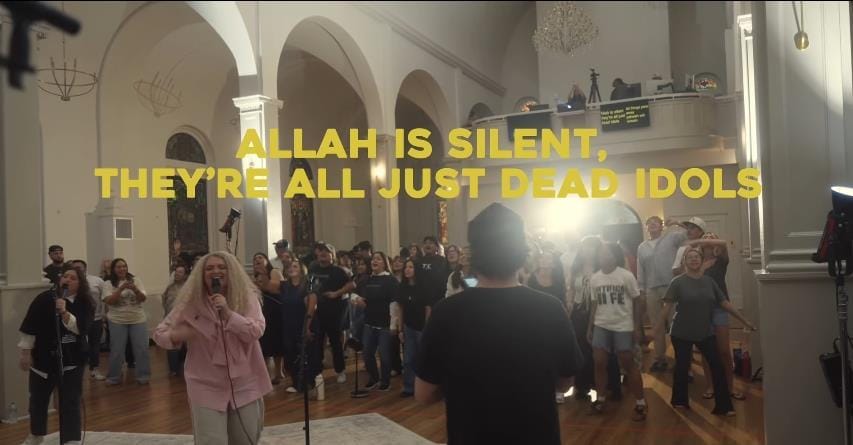
A new worship song has been circulating on social media and raising eyebrows. “Dead Idols”, by the American singer-songwriter Bailey Redmond, includes the lyric “Buddha is dead, Muhammad’s in the grave, Allah is silent, they’re all dead idols”. Writing in Premier Christianity, the UK worship leader and songwriter Richard James Butt admits his first reaction was to cringe: does the church really need to sing about other gods and other religions, and does that bring glory to God or build up the believer?
Rather than settle for his first judgment, Butt tries to ask deeper questions, starting with Scripture. In the Old Testament he finds Elijah on Mount Carmel taunting the prophets of Baal, who pray, dance and shout from morning until noon with no fire coming (1 Kings 18) — Baal is, in Redmond’s phrase, a dead idol. But the New Testament looks different. He finds no example of believers taunting people who worship a false god. Paul at Athens (Acts 17) does not shy away from telling the Athenians they are ignorant of whom they worship, yet he seeks common ground with them and argues persuasively rather than mocking.
Butt then turns to Redmond’s own context. She has explained that the song grew out of a ministry that equips American high-school students to share the gospel in their schools. Invited into an Islamic school, the team met a young girl who told them, “Tell them about Isa, the Prophet who heals, he is my favourite!” — Isa being the Qur’anic name for Jesus — and the team took the opportunity to speak about who Jesus really is. Redmond says it was compassion for those who are lost that moved her to write the song: a desire to proclaim the truth and, like Elijah, to rebuild God’s altar in a nation where she believes Christianity is under attack.
Butt says he was moved by that story, yet feels a disconnect between the gentleness of the conversation Redmond describes and a song that “doesn’t feel gentle at all”. As a worship pastor he has to decide what is appropriate for corporate worship, considering who is present, what their lives are like and what is needed — and he says he would probably not sing the song in a typical Sunday morning service, though he might in a prayer meeting or a time of intercession. Nuance, he observes, is what gets missed when a song arrives as an isolated viral clip. He ends by refusing a simple ban: at its core the song expresses a truth Christians do believe, and many congregations happily sing Chris Tomlin’s “Our God is greater”, which says much the same thing more softly. The church, he concludes, needs balance — God is holy and jealous, but also compassionate and kind, and we need songs that speak to all of those truths.
Source: Premier Christianity — premierchristianity.com


