
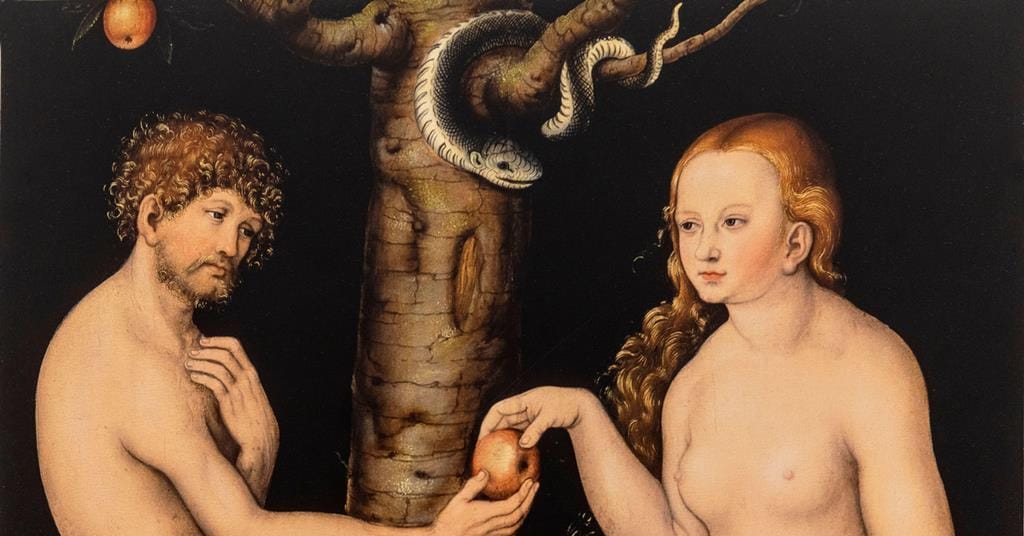
Nearly two-thirds of evangelicals in the United Kingdom agree with the statement, “Everyone sins a little, but most people are good by nature.” The finding comes from the latest State of Theology survey by Ligonier Ministries, and Dr Samuel Tunnicliffe, the ministry’s manager of partnerships for the UK and Ireland, argues in Premier Christianity that it should give the British church pause.
Tunnicliffe does not dispute that there is real goodness to be seen. Scripture itself teaches that human beings are made in the image of God, and that image remains, however damaged by the fall. But that is precisely his point: the fall is real, and sin is not merely something we do but something that has corrupted us. “The problem is not that we occasionally commit sins,” he writes. “The problem is that we are sinners.”
Why does the distinction matter? Because, he argues, our view of sin shapes our view of salvation. If people are fundamentally good, then what was Christ accomplishing on the cross? “A minor problem requires life advice,” he writes. “If we just need encouragement, education, or moral improvement, then a teacher would be enough. But Christianity claims that something far more dramatic was required. The Son of God came not simply to advise us. The Son of God came into the world to save sinners.”
The survey suggests the drift is measurable, and recent. In 2018, 61 per cent of evangelicals surveyed agreed that “even the smallest sin deserves eternal damnation”; by 2026, that figure had fallen to 49 per cent. Tunnicliffe points to James 2:10 — “whoever keeps the whole law but fails in one point has become guilty of all of it” — and explains why: sin is not merely the breaking of a rule but rebellion against a holy God. Our instinct, he says, is to grade sins on a sliding scale and assume that being better than others is enough, while the Bible’s standard is God’s own perfection.
To make the point concrete he turns to Auschwitz. When a prisoner escaped the camp in 1941, the SS selected ten men at random to die of starvation in retaliation. One of them, Franciszek Gajowniczek, cried out in despair for his wife and children — and a Polish priest, Maximilian Kolbe, stepped forward and offered to take the man’s place. Kolbe, Tunnicliffe writes, was among the best of humanity, and yet even Kolbe knew he needed a Saviour. “Christianity does not divide the world into good people and bad people. It divides the world into sinners who know they need grace and sinners who do not.”
None of this, he insists, is a reason to be gloomy about the church’s present. He welcomes signs of renewed spiritual interest across the United Kingdom and says Christians should rejoice whenever people come into churches, open a Bible or begin asking questions about Christ. But those newcomers, he writes, need more than enthusiasm — they need truth. The stakes, as he frames them, are finally about worship: “We can never comprehend the heights of grace if we first deny the depths of sin. The smaller our view of our guilt becomes, the smaller our view of Christ becomes, and our worship of him is lessened.” If the seriousness of sin is lost, he warns, the gospel itself begins to fade from view and the Bible is numbered among the self-help books.
Source: Premier Christianity — premierchristianity.com


