
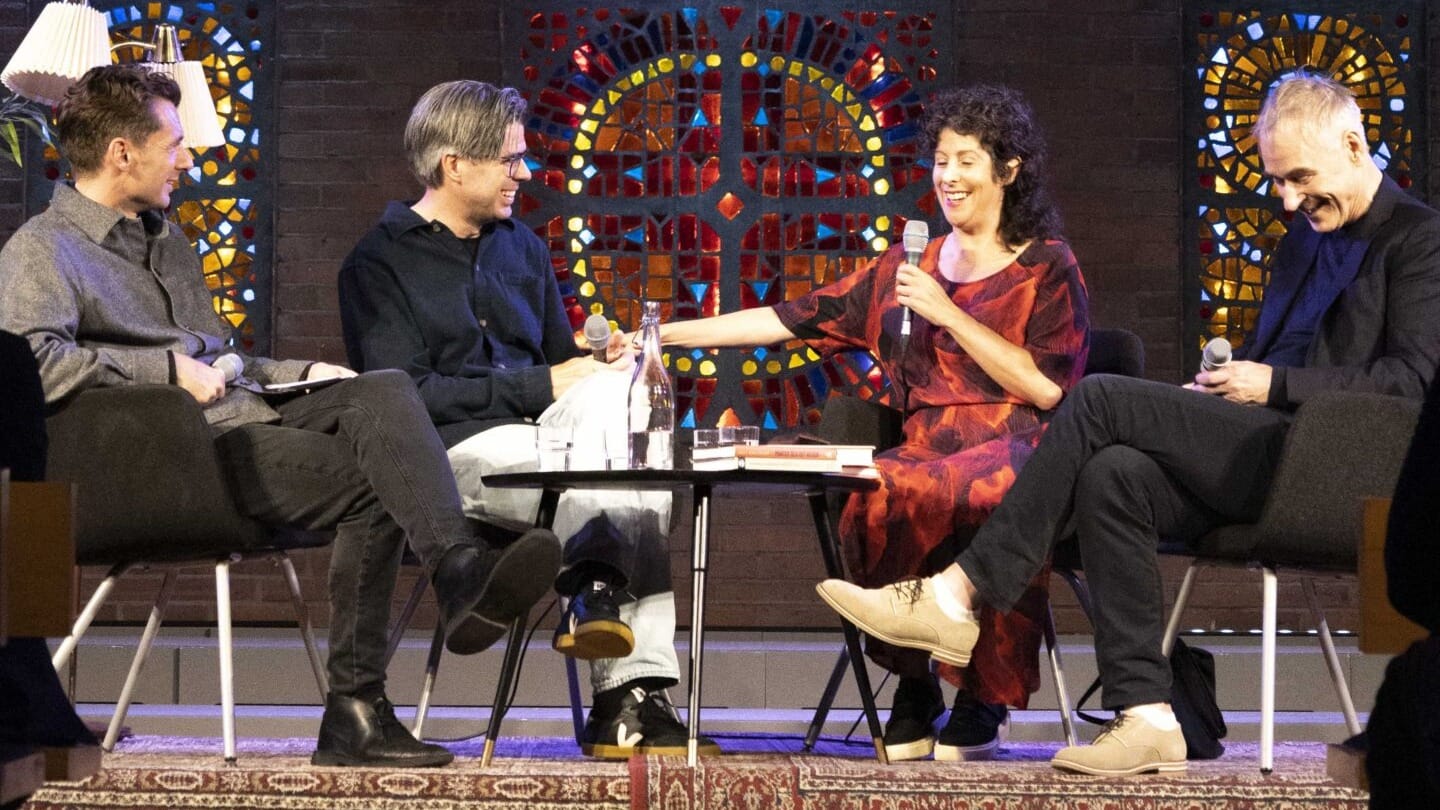
For four days in late September, Betlehemskyrkan in Gothenburg turned its church hall into a venue alongside the city’s annual Book Fair, gathering authors, researchers, musicians and members of the public for conversations that the fair itself had no time to finish. The programme, reported by the Swedish church newspaper Sändaren, ran from morning until evening and covered the future of solidarity, the figure of Judas, the origins of evil and the opening of Genesis. Organisers say the room was full, with latecomers asked to squeeze together so that more could be seated.
Betlehemskyrkan is a congregation of Equmeniakyrkan, the Uniting Church of Sweden formed in 2011 from the merger of three free-church traditions, and the Gothenburg Book Fair is one of the Nordic region’s largest literary gatherings. Hosting a parallel programme during the fair reflects a wider pattern among Sweden’s free churches of opening their buildings to public debate rather than keeping cultural questions at arm’s length — and of offering a church’s own rhythm of unhurried conversation to an event built on packed schedules.
The opening evening asked where solidarity has gone. Moderator Robert Eriksson put the question to the activist America Vera-Zavala, the historian Sverker Sörlin and the writer and pastor Joel Halldorf. Sörlin spoke of the study circle and the popular movement as more than a chance for individuals to learn, describing investment in popular education as “investment in ourselves” and a way of reducing the risk of being misled. Halldorf warned that a society of lonely people is easier to influence, and argued that resilient communities grow from small ones. Vera-Zavala, who came out of the global justice movement of the 1990s, said she still sees people organising and expects a larger movement to return; people must be ready to join it, she said, comparing it to a party — “we have to practise celebrating”.
A second evening paired literature with music. The novelist Niklas Rädström and the translator Alva Dahl talked with the cultural writer John Sjögren about the Bible as literature, while Tomas Boström read from Rädström’s novel Judas hägkomster and played alongside Emil Svanängen. Rädström said he had not set out to write about Judas as such but wanted to tell the story of Jesus through someone who stood close to the events. Dahl, who worked on the new Swedish translation of the New Testament, noted that the words a translator chooses carry older interpretations with them — including in how Judas and Jewish life have been portrayed — and reminded the audience that reading the Bible is also meant to be a pleasure. A third session asked where evil comes from, with the journalist Anna Lindman, the ethicist Ann Heberlein and the defence lawyer Viktor Banke; Banke said he wants to judge grave acts without declaring the person who committed them evil, while Heberlein insisted that the victim’s perspective must not be lost in the discussion.
(Originally published in Swedish. Summary translated by CC / Connexion.)
Source: Equmeniakyrkan / Sändaren — sandaren.se


