
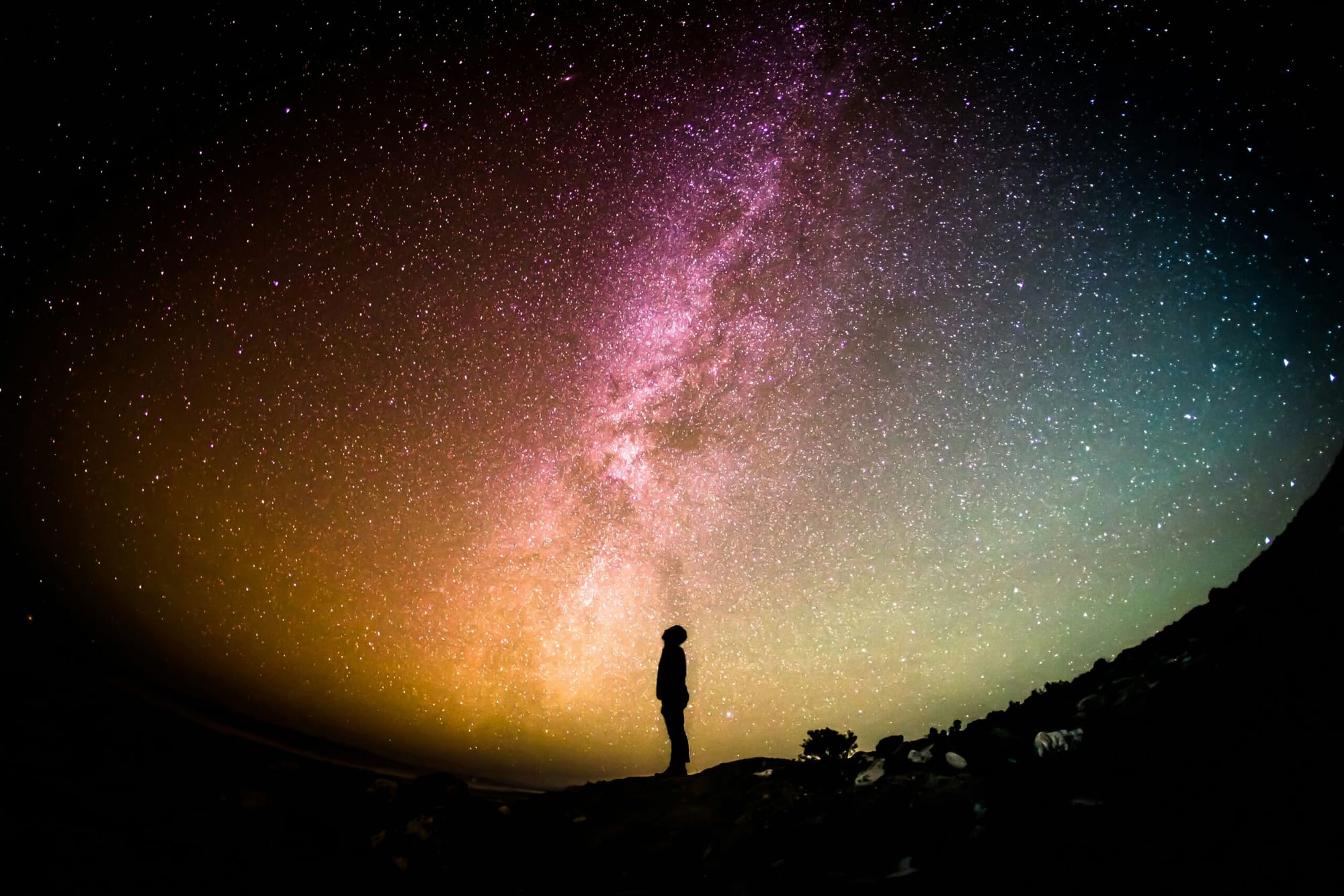
The more humanity discovers about the universe, the clearer it becomes how little we understand — and that is cause for wonder rather than doubt, writes Maria Küchen in a reflection for the Swedish Christian newspaper Sändaren. Drawing on imagery from the James Webb Space Telescope, which can peer 14 billion years into the past to what she calls "the dawn of creation," Küchen argues that modern astronomy has not made creation less mysterious but far more so, expanding the horizon of both science and faith in ways that complement rather than compete with each other.
Küchen weaves together insights from the early church, modern physics, and the Swedish theological tradition to make her case. She draws on the second-century bishop Irenaeus of Lyon — via the Swedish theologian Gustaf Wingren — to argue that creation is ongoing, not a completed event, and that it unfolds as an expression of God's love. She also points to Isaac Newton as a figure who united rigorous scientific inquiry with devoted biblical exegesis, insisting he described only how natural laws operate, not why. Faith and research, Küchen writes, "simply approach the essence of things from different directions" — neither cancelling the other out.
The article also invokes the "overview effect" reported by astronauts: the overwhelming sense, when viewing Earth from space, that the planet is small, fragile, and shared. Crew members of Artemis II, which circled the Moon in April 2026, have testified to a profound awareness of common humanity. Küchen suggests this perspective aligns with a theology of creation in which God is always at work everywhere, whether one believes or not. The piece closes with an image of cosmic joy — planets, suns, and galaxies moving according to divinely established laws that science can describe but never fully explain, each blade of grass existing, she writes, because of "God's delight in everything he has created and continues to create."
(Originally published in Swedish. Summary translated by CC / Connexion.)
Source: Equmeniakyrkan / Sändaren — sandaren.se


