
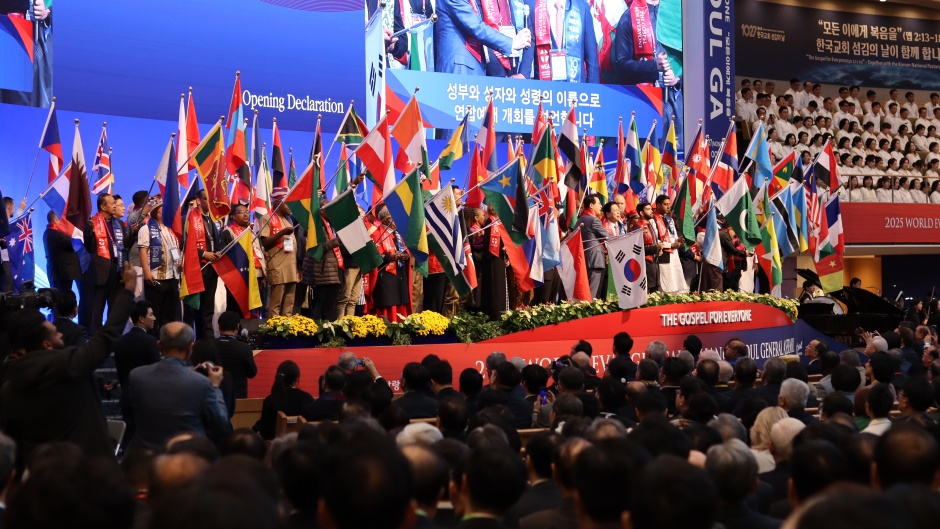
Two hundred years before Karl Marx published The Communist Manifesto, something remarkable happened in London. In 1846, church leaders from Protestant churches across Europe and North America gathered — crossing denominational lines, national borders, and centuries of theological disagreement — to form the Evangelical Alliance. It was, as WEA Global Ambassador Brian Stiller describes it, an act of extraordinary vision: Christians who had spent centuries dividing over doctrine chose to unite around shared convictions — the authority of Scripture, the necessity of new birth, the centrality of the cross, and the urgency of mission.
Today the WEA represents an estimated 650 million evangelical Christians across 163 national alliances, making it the largest and most geographically diverse evangelical network on earth. For the free evangelical family — including IFFEC member federations across Europe, Africa, Asia, and the Americas — the WEA provides infrastructure for advocacy, representation at the United Nations in Geneva and New York, and a platform through which persecuted believers can speak with recognised authority before international bodies. Stiller notes that the movement's centre of gravity has shifted decisively to the Majority World, raising fresh questions about governance and common voice that echo the 1846 founders' original challenge.
Writing in his "Dispatches" series on the 180th anniversary of the founding, Stiller acknowledges a paradox: the WEA operates "on a shoestring, with no significant, stable funding sources" despite its reach. Infrastructure, he observes, is "a notoriously hard sell" in fundraising, yet without it religious communities become "essentially invisible to the processes that shape international law." The article also traces the WEA's role in convening the 1974 Lausanne Congress, which produced the Lausanne Covenant and drew directly on relationships the Alliance had cultivated over generations. For free church movements worldwide, that convening power — bringing together voices from every continent around shared theological convictions — remains one of the WEA's most distinctive contributions to global Christianity.
Source: World Evangelical Alliance (WEA) — worldea.org


