
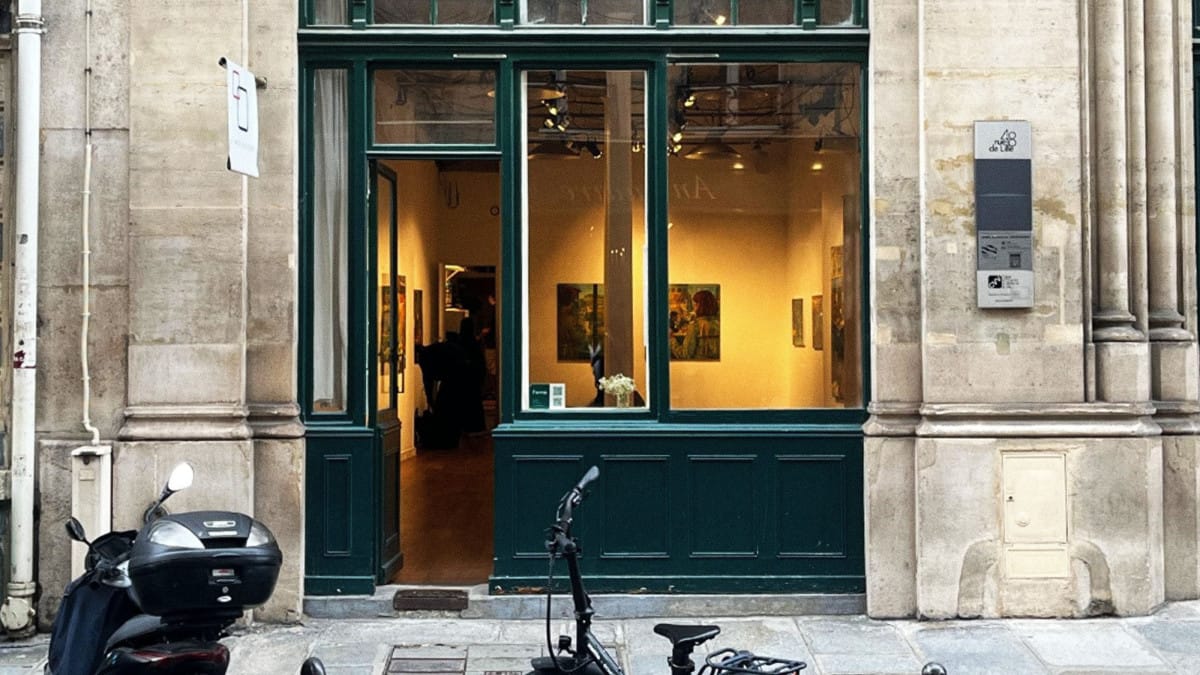
An international worker with the Evangelical Free Church of America (EFCA) has described how a small art gallery in central Paris has become the base for an unusual form of Christian ministry. Writing in the EFCA Blog on 7 July, Colin Welch recounted how he came to serve among the artists of the French capital, working out of a gallery with a deep-green façade on the edge of the 6th arrondissement, just steps from the Musée d'Orsay. For nearly two decades the gallery has been a gathering place for painters and other artists from across the city, and it now doubles as a setting for relationship-based mission. Welch calls artistic expression “a powerful doorway into people’s lives.”
The account offers a window into the EFCA’s ReachGlobal mission strategy in secular Western Europe, where conventional church-based outreach often struggles to gain a hearing. Paris continues to draw aspiring artists from every corner of the world, all hoping to absorb the legacy of masters such as Monet and Picasso, yet many find the city’s crowded creative scene isolating and fiercely competitive. By embedding himself in an established and respected arts venue rather than inviting people to a church building, the worker gains a natural place among people who might never otherwise encounter a Christian community — a model of what mission agencies increasingly describe as “creative-access” or presence-based ministry.
At its heart, Welch writes, arts ministry is about “seeing, hearing and truly knowing” the people behind the paintings, music, film and performance that fill everyday life. In practice that means a ministry of presence: celebrating with artists when a show opens or a performance ends, and staying close when a role is lost or a piece fails to sell. Much of the work unfolds in small, ordinary moments — a shared meal during rehearsals, a conversation after an exhibition is hung, or dreaming together about a future collaboration. It is slow, relational work, he suggests, that treats the vulnerability of creating not as an obstacle to the gospel but as an opening for it.
Source: Evangelical Free Church of America (EFCA) — blogs.efca.org


