
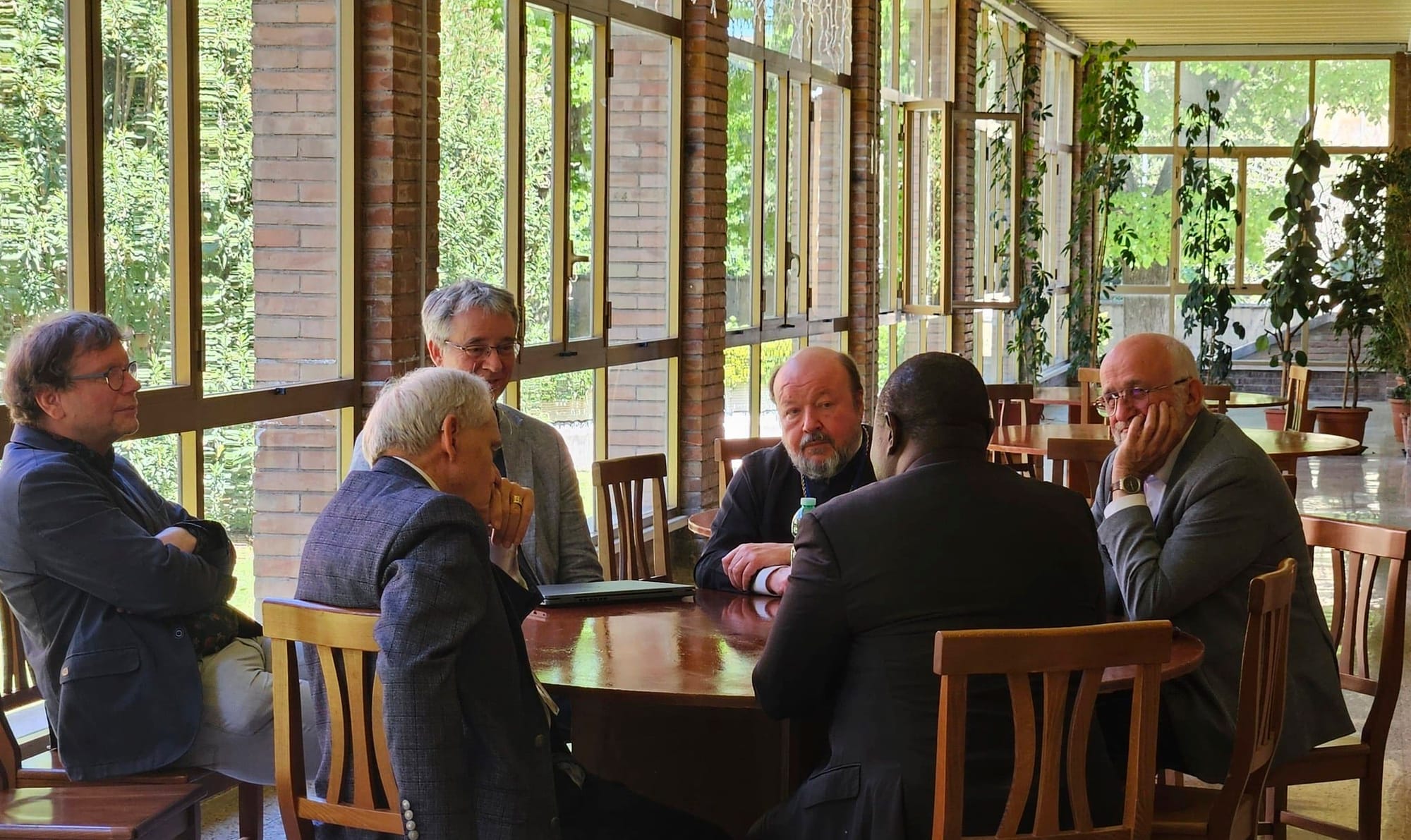
The International Committee of the Global Christian Forum (GCF) has met in Rome for three days of deliberations and reflective prayer, the World Evangelical Alliance reports. The committee spent a morning at the Vatican's Dicastery for the Promotion of Christian Unity, where members were received by its Prefect, Cardinal Kurt Koch, together with Archbishop Flavio Pace, Monsignor Juan Usma Gómez and other officials. The WEA is one of the forum's four constituting members, alongside the World Council of Churches, the Pentecostal World Fellowship and the Vatican, and the four bodies together form the Facilitation Group that steers the committee's work.
The GCF is deliberately non-programmatic: a "platform for encounter" in which none of the constituting participants takes the lead. Roughly every five years it draws Christians from all denominations to a global conference simply to share how they are experiencing their way with God — an approach the WEA describes as true unity in true diversity, building real fellowship without watering down personal or denominational convictions. That balance between genuine fellowship and doctrinal integrity is precisely the ground on which many free evangelical federations have historically been willing to engage ecumenically. The last global gathering was held in Accra, Ghana, in April 2024, and the 2029 conference may take place in Europe. The forum's slim administration is led by Rev. Dr. Casely Essamuah, a Ghanaian minister based mainly in Annapolis in the United States.
Alongside its formal sessions, the committee visited the Focolare Movement, the papal residence at Castel Gandolfo, and the Community of Sant'Egidio, which maintains a museum dedicated to Christian martyrs on Rome's Tiber Island and holds an annual day of prayer for modern martyrs. One concrete outcome emerged from that visit: at the community's request, the WEA delegation helped establish a direct link between Sant'Egidio and Open Doors, the evangelical ministry serving the persecuted church, giving the community access to broader information about suffering Christians beyond the mainline churches.
Source: World Evangelical Alliance (WEA) — worldea.org


