
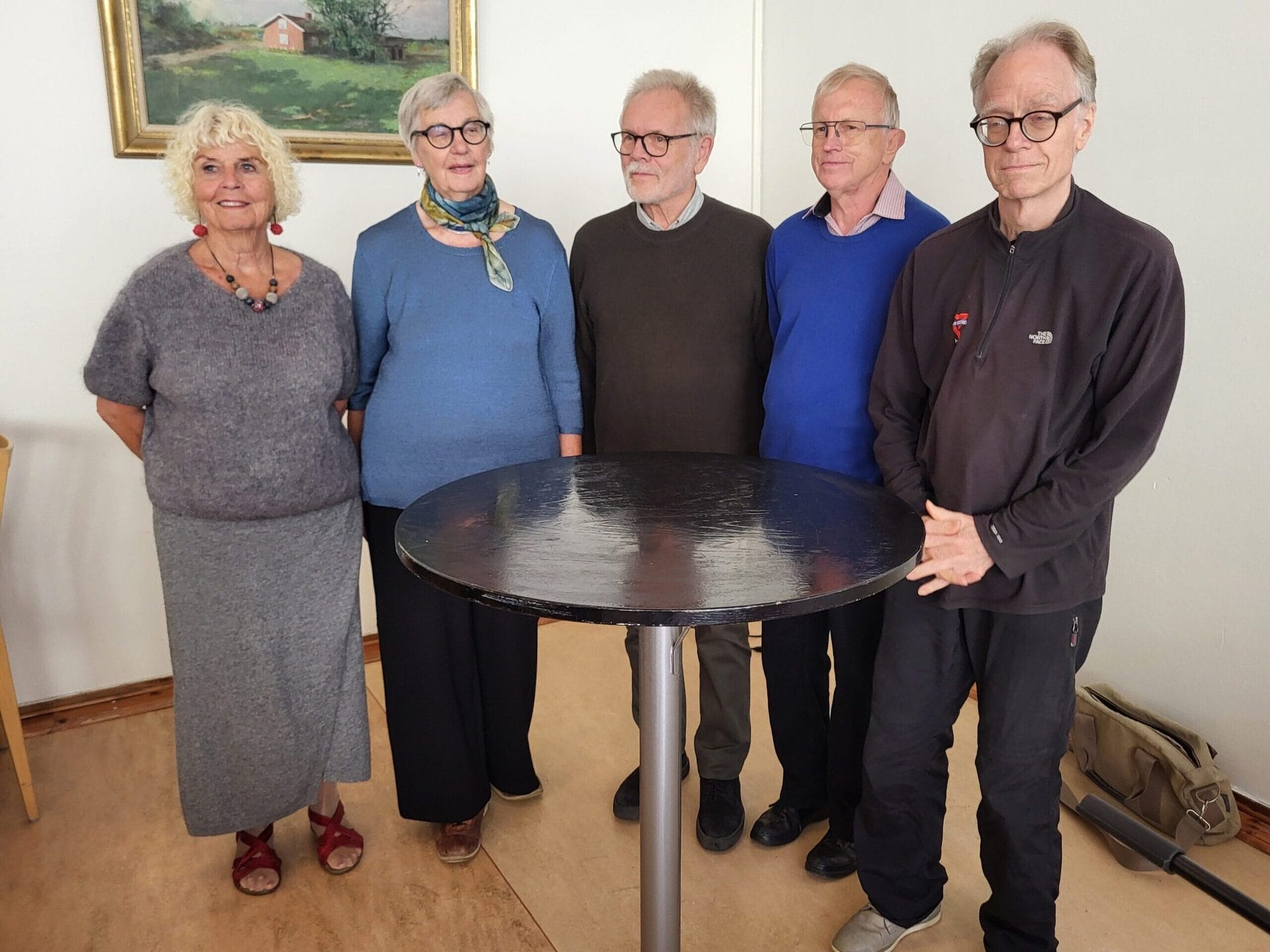
Five congregations of Equmeniakyrkan in the Swedish city of Örebro have voted to form a joint association. Around a hundred people gathered at Betelkyrkan on Saturday, where delegates from Equmeniakyrkan Vasa Örebro, Equmeniakyrkan Betania Örebro, Equmeniakyrkan Betel Örebro, Equmeniakyrkan Haga Örebro and Betlehemskyrkans församling i Örebro approved the creation of a new body named Equmeniakyrkan Örebro. The decision was celebrated with cake, and the following day the congregations came together for a shared church Sunday at Hagakyrkan.
The move gives formal shape to a cooperation that has been built over several years. Motions proposing closer collaboration came from members of the different congregations well before the vote, and roughly a hundred people have since taken part in conversations and focus groups covering children and young people, families, diaconal work and communications. Anna Lena Evehäll, congregation leader at Hagakyrkan and newly elected chair of the new association, described the approach as deliberate. "It is about people getting to know each other and feeling for each other," she said, pointing to shared confirmation groups, joint services and common congregation days.
The five congregations remain five independent congregations. The new association instead provides a formal structure for their cooperation, making it easier to handle matters that each currently manages on its own — joint events, administration, finance and agreements, and more everyday questions. Evehäll gave the joint purchase of toilet paper and other consumables as an example. Together the congregations have six pastors, one deacon and one youth worker, and have long shared an office at Vaskakyrkan, where they meet every Wednesday. She said the new structure means pastors and deacons who often work alone now have a team in which they can help, support and challenge one another.
Larger questions also lie behind the decision. Evehäll acknowledged plainly that the five are congregations with ageing communities, and said they need to pool their strength to reach people where they are, making the most of their differing profiles. One possibility she raised is that not every activity need continue in all five churches at the same time — there is no need for a language café or a knitting café in each — while church life can still be offered from five locations to a wide circle of people.
(Originally published in Swedish. Summary translated by CC / Connexion.)
Source: Sändaren (Sweden) — sandaren.se/nyheter/2026/09/28/fem-forsamlingar-bildar-equmeniakyrkan-


