
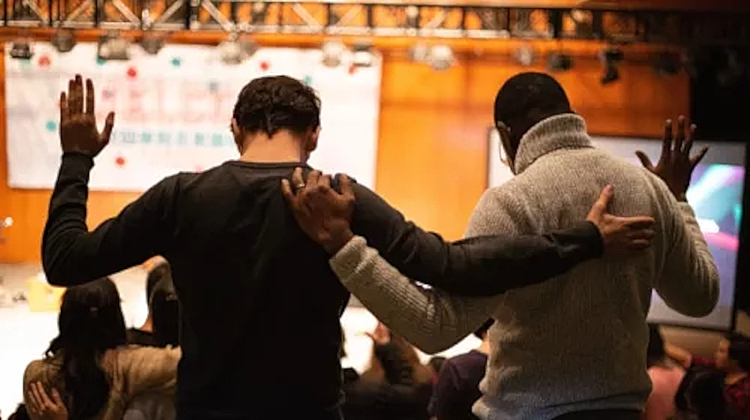
One of the most practically consequential convictions of the free evangelical tradition is also one of its most neglected: the universal priesthood of believers. Luther made the phrase famous; the free-church tradition has tried harder than most to live it out institutionally.
What it means
The universal priesthood does not mean that everyone does everything, or that there is no meaningful distinction between the role of a pastor and the role of a new member. It means that every believer has direct access to God through Christ — no human mediator, no sacramental gatekeeper — and that every believer is called to a form of ministry that uses their particular gifts for the building up of the body.
In the free-church tradition, this conviction shapes both theology and structure. Pastors and other ministry leaders are commissioned — recognised and authorised by the community to perform specific functions — rather than ordained in an ontological sense that marks them off as a different category of Christian. They are not less important; they are differently positioned. The congregation commissions; the congregation holds accountable; the congregation carries out the ministry of the whole body, not merely receives ministry from a professional class at the front.
What it looks like in practice
Across the free evangelical world, every-member ministry expresses itself in forms appropriate to each cultural context. In a German FeG congregation it might look like a lay elder board that genuinely governs the congregation, with the pastor serving as one of multiple gift-holders rather than a sole authority. In a Filipino EFCP congregation it might look like dozens of church members serving as deacons, children's workers, small-group leaders, and outreach coordinators — lay people doing work that in other traditions would require ordination. In an East African free church it might look like the congregation's older women functioning as pastoral caregivers for the younger, in a culturally appropriate expression of the gift of wisdom.
The Suomen Vapaakirkko in Finland explicitly built this conviction into its constitutional documents: the yhdyskuntajärjestys (community order) describes the denomination as a fellowship of congregations in which every believer is called to ministry and the gifts of all are needed for the whole.
The formation challenge
Every-member ministry creates a formation challenge that clergy-centric models don't face: you need to disciple, equip, and deploy not a small professional cadre but the whole membership. This is why free evangelical movements tend to invest heavily in theological education that is accessible to laypeople — short courses, congregational Bible study, distance learning — and why seminaries like the Theological College of the Suomen Vapaakirkko or, on a global scale, the Worldwide Evangelical Seminary exist: to make formation-grade theological training available to the whole people of God, not only to those preparing for ordained ministry.
The vision is demanding. A church of every-member ministers is harder to manage than a church served by professionals and attended by consumers. But it is, the tradition argues, closer to what the New Testament describes — and it produces, at its best, the kind of resilient, multiplying, community-embedded church that has proven so effective in the Global South.


